Focus · Globe Stocks Daily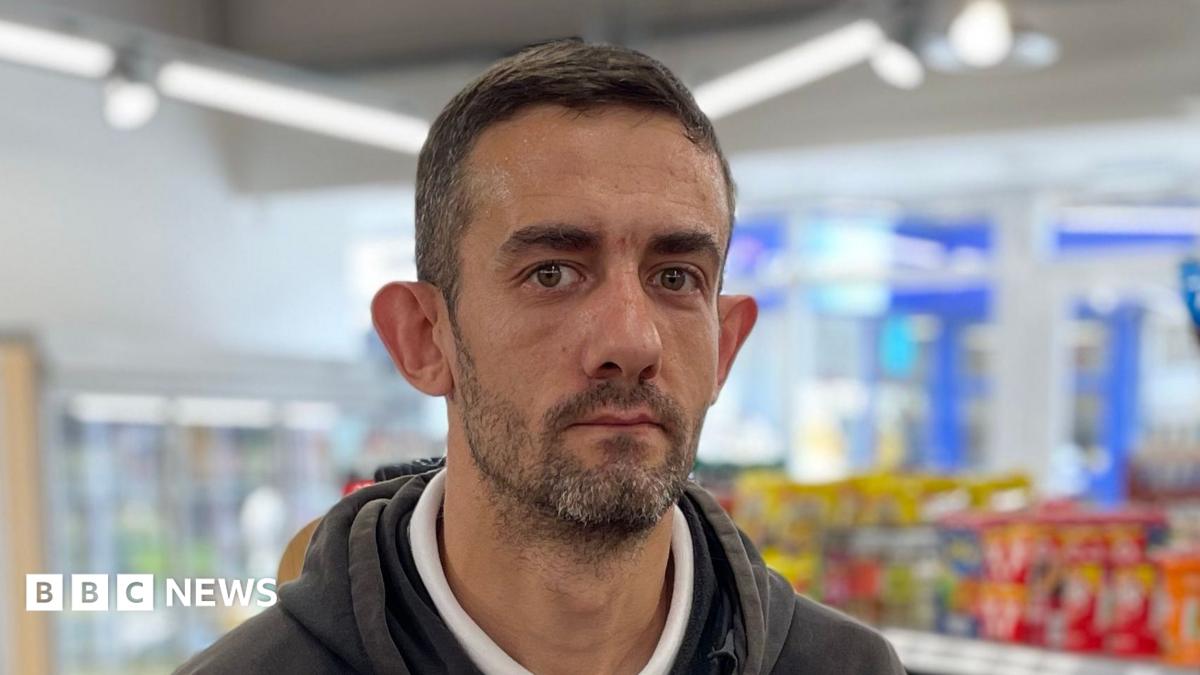
Image source, Ant Saddington/BBC Image caption, Darren has been stabbed during his work as an undercover store detective By Lewis Adams Turning up for work each day, Darren fears he could face violence at any given moment. He has been stabbed with needles and held at gunpoint during an 18-year career on the UK's High Street. Darren is not a police officer, however, but a store detective - an undercover security guard who poses as a customer to catch thieves in the act.
"You do go home sometimes thinking, 'Why am I in this job?'," he tells the BBC. "But I see it as if I have to pay for my stuff; everybody has to pay for their stuff." Shortly before Darren meets the BBC in Northampton, he has foiled a man who swiped chocolate bars from the shelf, pocketed them and walked out. "It's very busy.
You could name any store and I can guarantee it will be robbed that day," says Darren, whose surname is being withheld to protect his identity. "I've been stabbed with needles, pen knives, had a gun pulled out on me. I've had so many knives pulled out on me." Image source, James Grant/BBC Image caption, Northamptonshire Police recorded 5,514 shoplifting offences by September Shoplifting offences totalled 502,011 in England and Wales in the 2025-26 financial year.
It costs retailers and customers £2.2bn a year, according to the British Retailers Association. In Northamptonshire, police recorded 5,514 offences by September, a drop of 22% on the year before. A spokesman for Northamptonshire Police says thefts have a "significant impact" on businesses, staff and communities, and tackling offenders remains a priority.
Image source, Alex Dunlop/BBC Image caption, Jonathan James says he takes thefts from his family-run business "very, very personally" Among those affected by shoplifting is Jonathan James, whose family-run company operates 40 convenience stores - including in Northampton. He can easily reel off plenty of items snatched from his shelves each day. "Coffee is a big one.
Nappies, razor blades are something that get stolen a great deal, cheese, meat," James says. "They're all products that are easily saleable and can govern a reasonable price." While James tries to design out crime with his shops' layout and relies on CCTV to record offences, he believes legislation will also ease another problem: attacks on staff. Assaulting a retail worker was made a criminal offence under the Crime and Policing Act 2026, with a maximum penalty of six months in prison or an unlimited fine for the culprit.
Research by the Union of Shop, Distributive and Allied Workers (Usdaw) found 78% of almost 9,000 retail staff in 2025 were verbally abused, while 54% were threatened and 11% assaulted. Those figures were 68%, 43% and 5% respectively in 2019. James says the legacy of attacks and thefts makes it difficult for him to recruit.
"Ultimately these people are stealing from me and my family, so we take it very, very personally," adds the entrepreneur, referring to the financial impact. "It's our own income, so, as it's worsened, it really does get us down." Northamptonshire Police says its detectives have solved 20 more shoplifting offences over the past year, with 2,053 overall. Alongside enforcement, work is being done to "address the underlying causes of offending and find longer-term solutions", its spokesman adds.
Warning: Graphic image below Image source, Kate Bradbrook/BBC Image caption, Puntambekar wants the police to do more to tackle shoplifting Finding those root causes of shoplifting is something Amit Puntambekar, who runs a shop in Fenstanton, Cambridgeshire, can get behind. "We're seeing a different type of shoplifter now. Sometimes we're seeing people who are 60-plus, who might be struggling," he explains.
"We're seeing them not doing what's in their nature, but doing it to survive." Puntambekar was attacked while trying to restrain a shoplifter in January 2025, but managed to hold on to them until the police turned up. "It is what it is, unfortunately. This is part and parcel of retail in this day and age," he said.
The shopkeeper partly relies on artificial intelligence (AI) to help catch thieves. Image source, Amit Puntambekar Image caption, Amit Puntambekar pictured after an assault inside his shop in Fenstanton in January 2025, which he reported to the police He pays £3,500 a year to have AI linked to his CCTV cameras, which in turn alert him when something is taken off a shelf and put into a pocket or bag. This is reliable for gathering evidence, Puntambekar says, but he believes the process for reporting the crimes is too laborious.
It can take up to half-an-hour and, in the shopkeeper's view, is a lot of effort for little reward. "We know the police aren't going to do anything and, as an impact, it probably looks like we don't get stolen from very often," Puntambekar explains, referring to crime statistics. "It's so expensive in time that we were already spending trying to stop the shoplifting." A spokesman for Cambridgeshire Police urged businesses to report shoplifting, as it would help to build "a bigger picture" of the problem.
"We're aware shoplifting can have a huge impact on those involved in the business community as well as local residents, and this is one of the reasons why it is a key issue for officers across the county," he said. The spokesman added all crime reports were taken seriously and prosecutions were always sought where possible. Additional reporting by Kate Bradbrook and Alex Dunlop Do you have a story suggestion?
Contact us below. Get in touch Your Voice Follow East of England news on X , external , Instagram , external and Facebook: BBC Beds, Herts & Bucks , external , BBC Cambridgeshire , external , BBC Essex , external , BBC Norfolk , external , BBC Northamptonshire , external or BBC Suffolk , external .
Source: BBC