Focus · Globe Stocks Daily
Oil prices extended gains on Monday as tit-for-tat strikes between the U.S. and Iran on vessels sailing in the Strait of Hormuz and other areas heightened concerns of a prolonged supply disruption from the Middle East. Brent crude futures climbed 52 cents, or 0.54%, to $96.80 a barrel by 2354 GMT while U.S. West Texas Intermediate crude was at $92.14 a barrel, up 66 cents, or 0.72%.
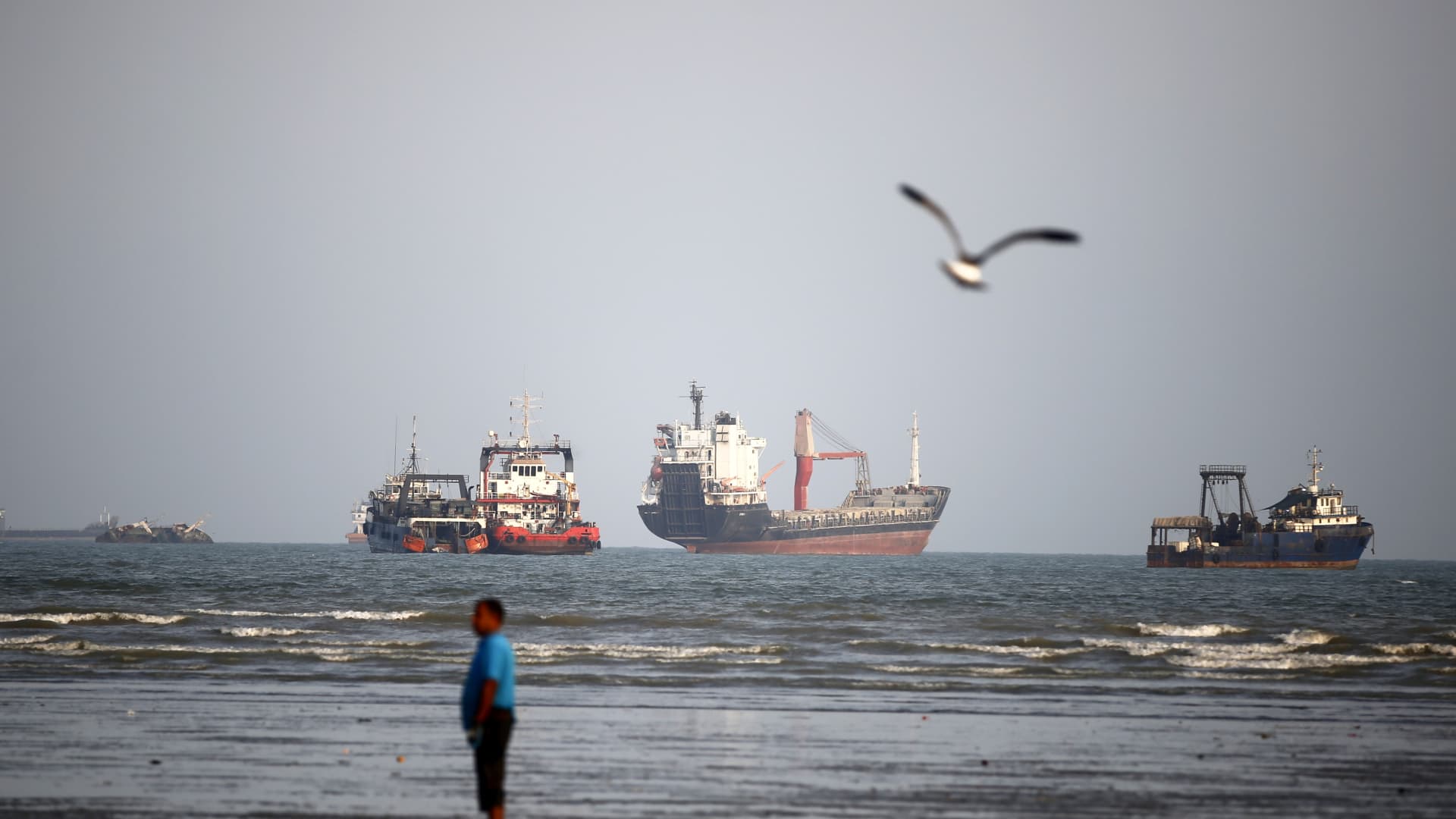
Brent rose 7.8% last week while WTI gained nearly 10% after the U.S. and Iran resumed attacks and caused a reduction in oil flows through the Hormuz strait, where a fifth of the world's oil supply used to transit. U.S. forces struck three Iranian oil tankers on Saturday, including one off the coast of Kharg Island, near Iran's key oil export hub. Iran's Islamic Revolutionary Guard Corps targeted three oil tankers traveling through unauthorized routes in the Strait of Hormuz and three U.S. vessels in other areas.
The Saturday attacks marked a "major escalation in the maritime conflict". Commercial tankers are now deliberately used as instruments of reciprocal economic pressure, weakening the distinction between military confrontation and commercial shipping. An average of 10 commodity ships transited the Strait of Hormuz per day over the past 10 days, the lowest since May, according to Kpler data.
A restricted zone will be announced outside the Strait of Hormuz in coming days. OPEC+ maintained its oil output policy unchanged for October, awaiting agreement on new quotas. A prolonged standoff with calibrated military actions by the U.S. and Iran is expected to delay Middle East supply recovery, with exports constrained through 2026 before gradual reopening in late Q4 2026, with pre-war throughput not expected until late Q1 or early Q2 2027.
Source: CNBC